
Stanford Scientists Develop Photonic Chip to Revolutionize Optical Imaging
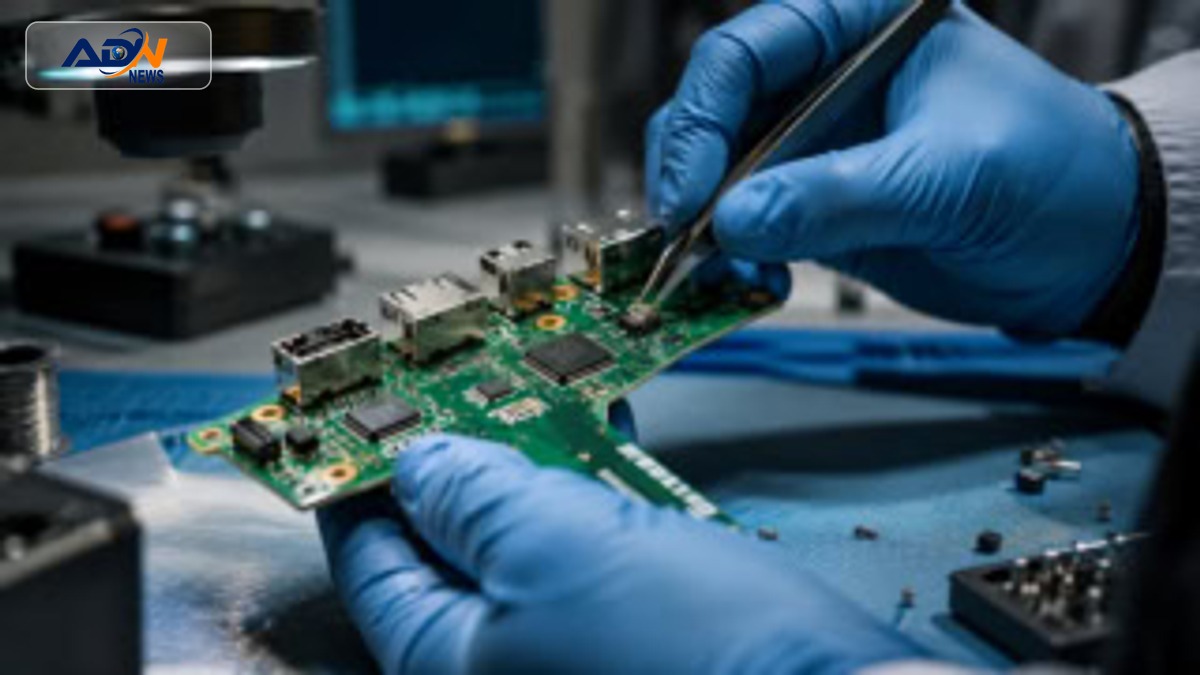
SAN FRANCISCO: In a landmark scientific breakthrough, researchers at Stanford University have successfully developed a groundbreaking photonic chip capable of untangling complex, mixed light signals into clean and distinct individual beams. The miniature fingernail-sized semiconductor device achieves an optical processing feat theoretical physicists proposed decades ago but previously found experimentally impossible. Detailed in a study published in the prestigious journal Nature Photonics, the revolutionary hardware holds the potential to dramatically enhance imaging capabilities across everyday digital cameras, medical microscopes, and deep-space astronomical telescopes.
The newly developed light-sorting chip directly addresses a fundamental challenge in optical physics: the degradation and scattering of light waves as they traverse turbulent mediums such as Earth’s atmosphere, biological tissue, or opaque liquids. By routing scrambled optical signals through an intricate micro-architecture of silicon waveguides, the device rapidly reconfigures light pathways to separate overlapping wavelengths without losing signal clarity. Researchers noted that previous attempts to construct similar spatial light modulators required massive laboratory setups, whereas this integrated photonic circuit condenses the entire operation onto a microchip operating with unprecedented speed and energy efficiency.
The practical applications of this technological advancement extend far beyond theoretical physics into commercial and scientific sectors worldwide. In medical diagnostics, the chip could enable clinicians to peer deeper through human tissue with non-invasive high-resolution imaging, potentially revolutionizing early detection mechanisms for cancer and neurological disorders. Furthermore, modern telecommunications networks could leverage the technology to dramatically expand data transmission capacities over optical fibers by unmixing multiple data-carrying light channels simultaneously, while autonomous vehicles could see through dense fog and torrential rainfall with enhanced LiDAR systems.
Following their successful experimental validation, the Stanford research team is now working toward integrating the photonic chip into existing commercial sensor manufacturing pipelines. Future development phases will focus on scaling production, expanding the chip’s operational bandwidth across broader spectrums including infrared, and collaborating with industrial optical manufacturers. As field tests proceed over the coming months, tech analysts anticipate that this optical separation technology will redefine the next generation of high-precision imaging systems and high-speed data networks globally.