
ESA’s Euclid Telescope Maps Over 900 Million Galaxies in Cosmic Atlas
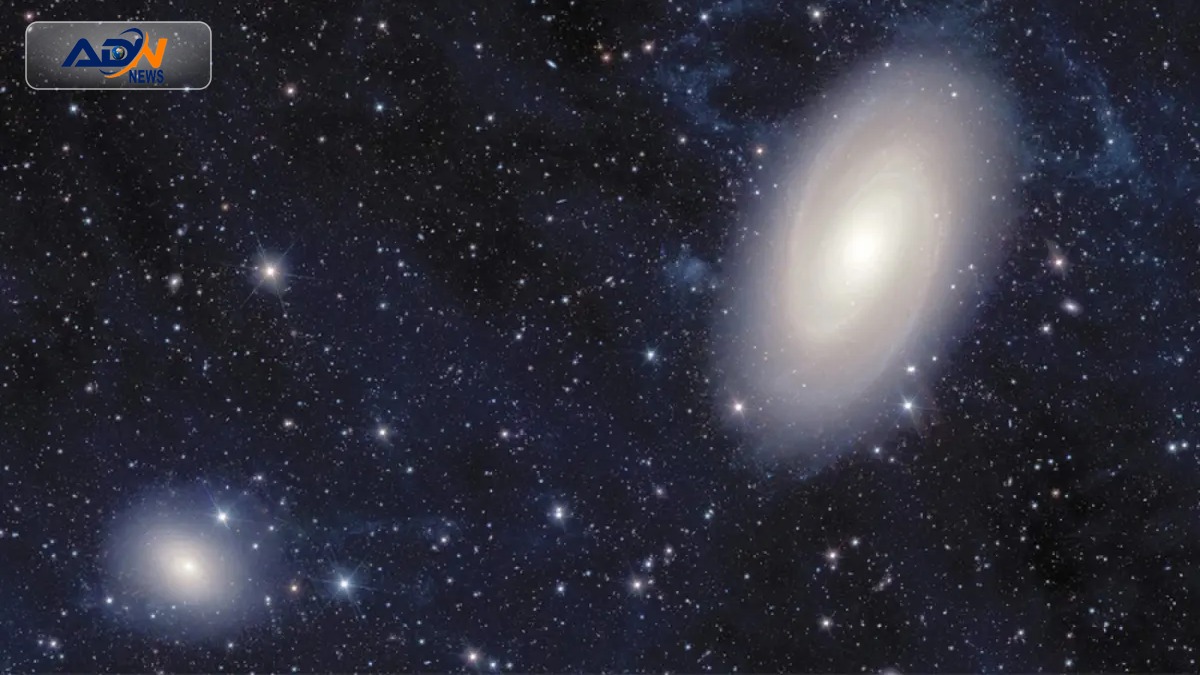
PARIS: The European Space Agency (ESA) has officially released its first major dataset from the orbiting Euclid space telescope, mapping more than 900 million galaxies in an unprecedented scientific endeavor to chart the large-scale structure of the universe. Launched to unravel the cosmic mysteries of dark matter and dark energy, the space observatory has delivered extraordinary astronomical observations that mark a monumental leap forward in understanding how the cosmos evolved over billions of years.
The comprehensive dataset released on Thursday covers a celestial survey equal to nearly 9,500 times the size of the full moon as viewed from Earth. Accumulated over approximately 13 months of continuous observations, the staggering cosmic repository totals 1.7 petabytes—equivalent to 1.7 million gigabytes—of detailed scientific data. “It marks a major milestone for ESA’s Euclid mission and for everyone involved,” stated astrophysicist Valeria Pettorino, ESA’s Euclid project scientist, highlighting the extraordinary collective effort of the international research team.
Following its successful launch from Florida in 2023, the Euclid observatory was deployed to construct the largest and most accurate three-dimensional atlas of the cosmos ever assembled, targeting more than a third of the sky by 2031. By analyzing the precise positions, light spectrums, and shapes of hundreds of millions of distant galaxies, researchers aim to trace how cosmic structures formed under the influence of gravity and quantify the mysterious forces driving the expansion of space.
Astrophysicists worldwide are now preparing to leverage this unprecedented data catalog to probe dark energy—the elusive force accelerating cosmic expansion—and dark matter, the invisible substance comprising most of the universe’s mass. Further scientific discoveries and analytical studies are expected to emerge in the coming months as researchers process the immense wealth of cosmic imagery provided by the mission.