
German and US Scientists Awarded Nobel Prize for Brain Research Innovations
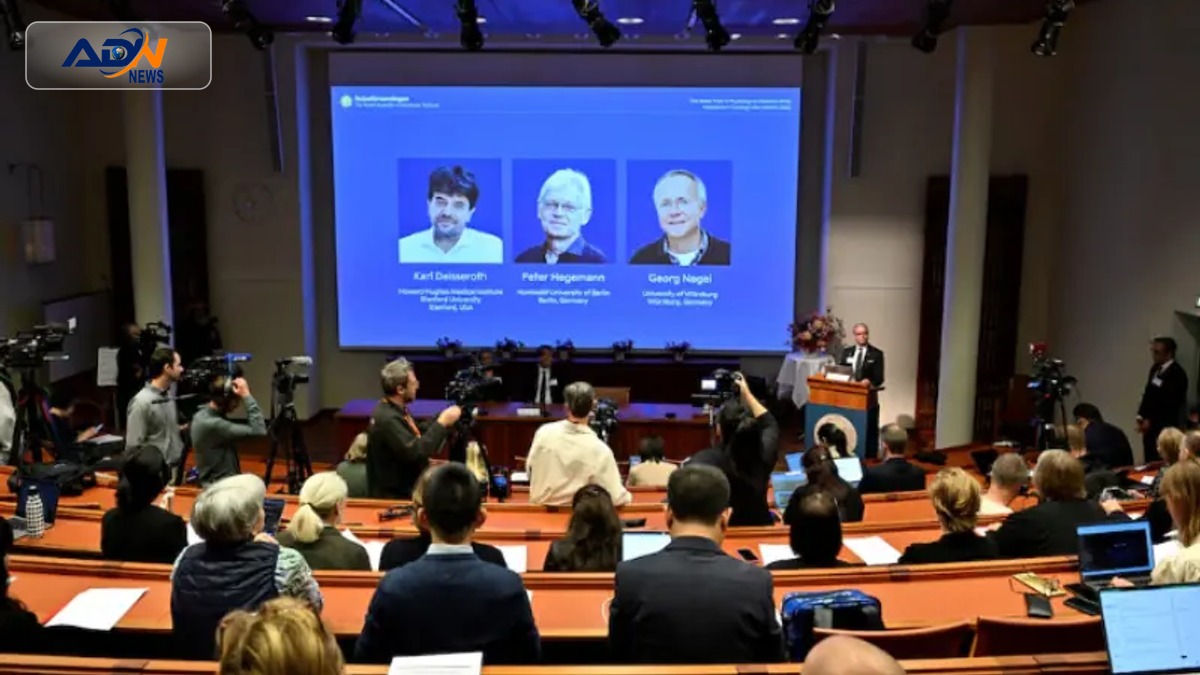
STOCKHOLM: American scientist Karl Deisseroth and German researchers Peter Hegemann and Georg Nagel have been awarded the 2026 Nobel Prize in Physiology or Medicine for their groundbreaking work on light and optogenetics, which has significantly advanced the understanding of brain function.
The Nobel Assembly at Sweden’s Karolinska Institute announced the laureates on Monday, recognizing their contributions to the field of neuroscience. Deisseroth, 54, Hegemann, 71, and Nagel, 73, were honored for their discoveries related to light-gated ion channels and the development of optogenetics, a technique that allows scientists to control the activity of individual nerve cells using light.
Thomas Perlmann, Secretary-General of the Nobel Assembly, emphasized the transformative impact of optogenetics, stating, “This method is now being used in laboratories around the world to reveal the brain’s mysteries.” This innovative approach has opened new avenues for research, enabling scientists to explore complex neural circuits and their roles in behavior and disease.
As the field of neuroscience continues to evolve, the implications of these discoveries are profound, potentially leading to new treatments for neurological disorders and enhancing our understanding of cognitive functions. The scientific community eagerly anticipates further developments stemming from this research, which could pave the way for future breakthroughs in brain science.