
NASA Crew Completes 378-Day Mars Simulation at Johnson Space Center
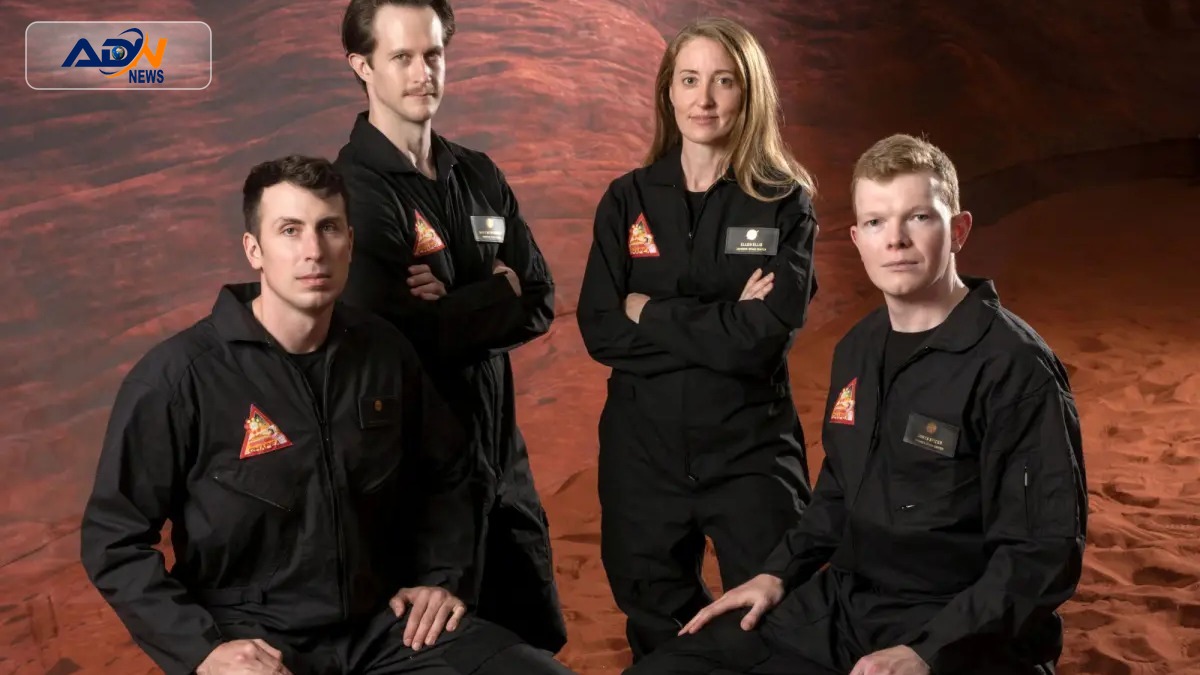
HOUSTON: A crew of four has successfully completed a groundbreaking 378-day simulated mission to Mars at NASA’s Johnson Space Center, marking a significant step in preparing for future human exploration of the Red Planet. The team emerged from their 158-square-meter 3D-printed habitat on Saturday, having entered on October 19, 2025.
Ellen Ellis, the medical officer on the Crew Health and Performance Exploration Analogue (Chapea) mission, described the experience as “a hell of a year — analogue astronauts living in captivity of our own free will.” During their isolation, the crew engaged in various tasks, including growing crops in simulated Martian soil and communicating with NASA officials under conditions that mimicked the delays of interplanetary communication.
This mission not only tests the physical and psychological endurance of astronauts but also provides valuable data on how to sustain human life on Mars. The insights gained will be crucial for NASA’s plans to send astronauts to Mars in the coming decades, potentially revolutionizing our understanding of space travel and habitation.
Looking ahead, NASA plans to analyze the data collected during the Chapea mission to refine its strategies for future missions. The agency is expected to hold a series of briefings and discussions to share findings and outline the next steps in its Mars exploration roadmap.